Newfrom $239
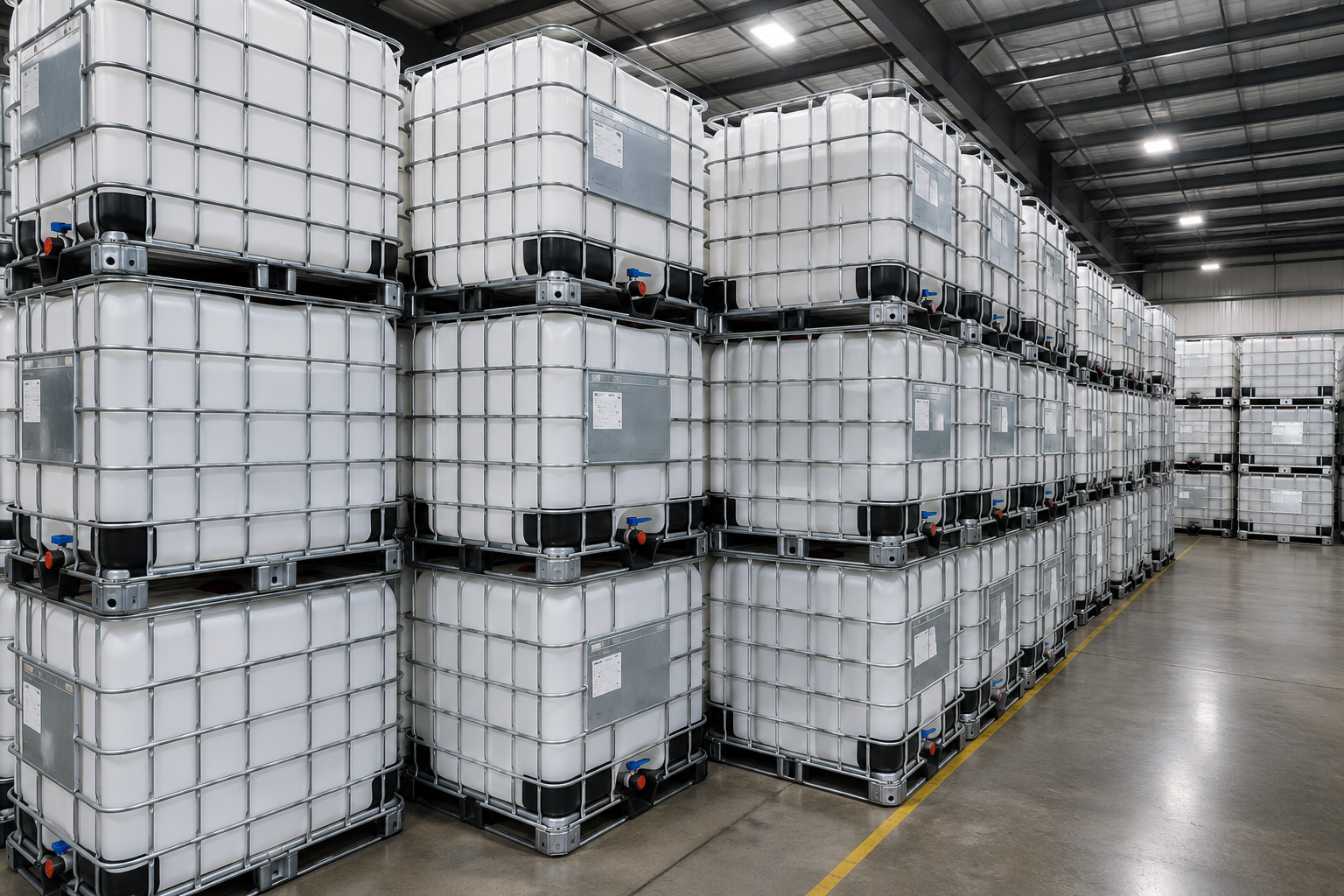
275 Gal New (First-Trip)
Never-filled totes for the strictest sanitary or regulatory needs. UN/DOT rated.
- · 48 × 40 × 46 in
- · New bottle & cage
- · UN 31HA1/Y rated
- · Tamper-evident
Some programs simply require never-filled packaging. Our new first-trip totes are UN/DOT-rated and tamper-evident — and when you're done, we'll help keep them in circulation for decades.
UN/DOT-rated 275 or 330 gallon. Tell us quantity and contents and we'll email a quote.
Pharmaceutical intermediates, regulated food programs, sensitive chemistries and audited supply chains sometimes mandate a first-trip container — one that has never held another product. We stock UN 31HA1/Y-rated totes in 275 and 330 gallon, with tamper-evident closures and full documentation.
The reuse story doesn't end at purchase. Most "single-use" totes have decades of safe service left. When your first trip is done, sell it back to us and it re-enters the circular economy instead of a landfill.
UN packaging code for rated liquids transport.
Both first-trip capacities in stock.
Forklift entry on a reinforced base.
Buy-back eligible at end of first trip.
Never-filled totes for the strictest sanitary or regulatory needs. UN/DOT rated.
Maximum capacity, never-filled, for bulk programs that demand virgin packaging.
| Option | Cleanliness | Footprint | Best for |
|---|---|---|---|
| New (first-trip) | Virgin bottle & cage | Highest | Regulated, sanitary, audited programs |
| Rebottled | New bottle, reused cage | Low | New-bottle cleanliness, greener buy |
| Used Grade A | Cleaned food-grade | Lowest | Most edible & potable jobs |
| Used Grade B | Washed industrial | Lowest | Non-potable, water & process |
When traceability is non-negotiable, a never-filled tote removes a whole class of questions. There is no prior-contents history to document, no cross-contamination risk to validate, and a tamper-evident closure that shows the unit reached you untouched.
The UN code stamped on a rated tote is not decoration — each character certifies something specific about the design and what it may legally carry. Here is the breakdown.
| Code | Meaning | Why it matters |
|---|---|---|
| 31 | Composite IBC for liquids | Confirms the tote is designed and tested to hold liquids, not just solids. |
| HA | Rigid HDPE inner, steel outer frame | The familiar plastic-bottle-in-a-steel-cage construction. |
| 1 | Design type / pressure category | Identifies the qualified build for the contents class. |
| Y | Packing group II & III approval | Cleared for medium-hazard contents (X = high, Y = medium, Z = low). |
You will also find the manufacture date, the maximum stacking and gross-mass figures, and the test pressure stamped alongside the code. A reused tote can keep its rating only while it is inside its periodic inspection and leakproofness retest interval — full detail lives in our FAQ.
Audited food programs that require a documented, never-filled food-contact bottle from the first fill.
Pharmaceutical intermediates and specialty chemicals where any prior-contents history is disqualifying.
Hazmat liquids moving on public roads under a valid, in-interval UN 31HA1/Y design-type marking.
Not sure you truly need first-trip? A rebottled tote often delivers the cleanliness you need for far less. Compare every grade on the products overview.